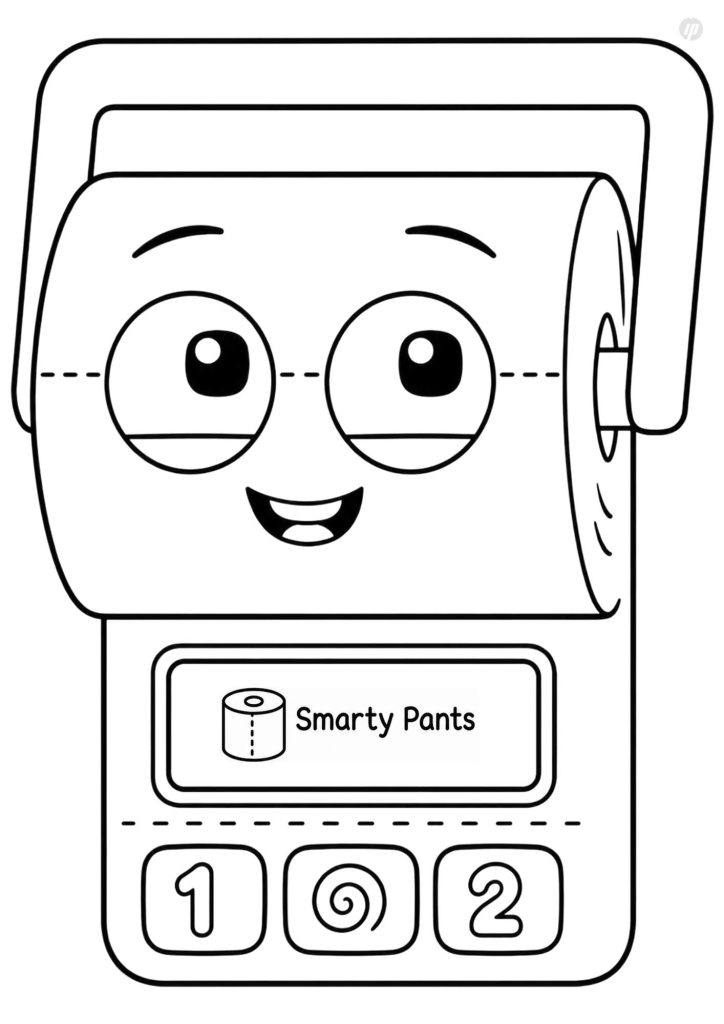

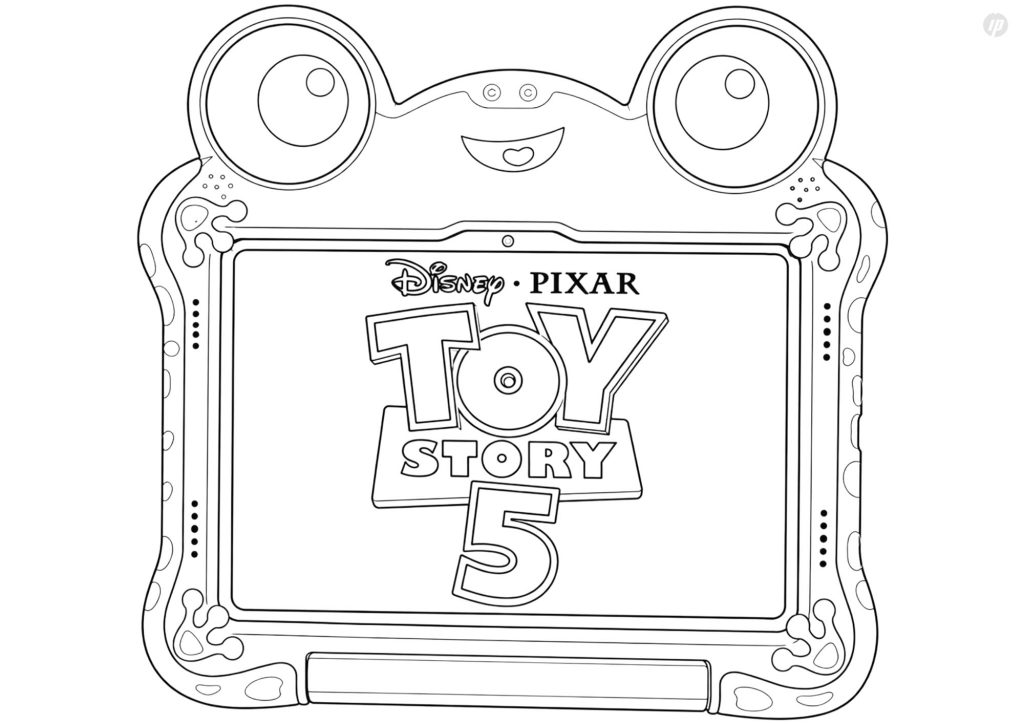
“Uh oh, Bonnie found a new favorite!” Imagine Woody peeking out from behind a toy box while a glowing screen lights up the whole room. Buzz freezes in the middle of a heroic pose. Jessie raises an eyebrow. Rex whispers that the new toy might know everything on the internet. Right there in the center of the commotion is Lilypad, the clever tablet character from Toy Story 5 who brings a completely different kind of play into Bonnie’s world. She can glow, respond, entertain, and keep a child’s attention with a single tap. That sounds pretty amazing, but the other toys are left wondering what happens to make believe when a screen starts doing all the imagining for you. This Lilypad Toy Story 5 coloring page gives kids the chance to jump into that question with crayons, markers, colored pencils, and plenty of wild ideas.
Lilypad does not enter the room like an old fashioned action figure waiting for someone to move her arms. She arrives with sounds, pictures, games, and answers ready to go. Bonnie can touch the Lilypad tablet and see something happen right away. There is no need to build a castle out of couch cushions or turn the hallway into a roaring race track. Everything feels fast, bright, and exciting. Woody and the gang know another style of fun, though. Their greatest adventures have started with cardboard boxes, costume hats, blankets, plastic spoons, and stories that make absolutely no sense until a child decides they do. A regular afternoon can become a rescue mission on Mars, a dinosaur parade, or a royal tea party where every guest is wearing a sock.
That makes Lilypad such a fun character to color. She stands between two kinds of play. One kind flashes on a screen, and the other grows inside a child’s imagination. When kids color Lilypad, they get to take control of her look without tapping a menu or choosing from a row of digital options. They can make her green, purple, pink, blue, orange, or every color in the crayon box. Her screen might glow like a rainbow. Her details could look like candy buttons, tiny stars, frog spots, or colorful game icons. A child might even decide that Lilypad changes color depending on her mood. Maybe she turns bright yellow when she is happy, deep blue when her battery is sleepy, and sparkly red when an adventure is about to begin.
There is no automatic color fill on a printed page. A crayon does not stay perfectly inside the lines unless the artist guides it. A marker may leave one part darker than another. Colored pencils can overlap and create a shade that was not planned at all. Those little surprises are part of the fun. Each finished drawing of Lilypad becomes different because every child moves their hand in a different way. One artist might press hard and create bold colors. Another might use soft strokes that barely touch the paper. Someone else may add so many patterns that Lilypad looks ready to host the most colorful game show in the toy room.
Kids can also draw a whole world around the character. The blank space near Lilypad might become Bonnie’s bedroom, a secret digital clubhouse, or a giant lily pond hidden beneath the floorboards. Woody could be drawn holding a pretend map while Buzz scans the area for clues. Jessie might race across the page on a toy horse, trying to reach Lilypad before her battery runs out. Rex could carry a charging cable in his mouth while shouting directions that nobody understands. Forky might stare at a wall outlet and ask whether it is a tiny robot cave. Once a pencil starts moving, the Lilypad coloring page can grow into a brand new Toy Story 5 scene created by the child.
A funny adventure could begin with one little problem. Picture Lilypad announcing that she has discovered the perfect game for everyone. The toys gather around, expecting spaceships, cowboys, dinosaurs, and daring escapes. Instead, the screen tells them to tap the same bouncing circle one hundred times. Buzz takes the challenge very seriously. Rex taps too early and panics. Woody tries it twice, gets bored, and starts building a fort from books. Before long, the fort becomes a train station, the train station becomes a jungle camp, and the jungle camp turns into a hideout for space pirates. Lilypad watches the story grow without a single app controlling what happens next.
That imaginary scene gives children a playful way to think about creativity. Screens can offer games, music, stories, and plenty of laughs. Toys, paper, and crayons invite children to invent the missing pieces themselves. Neither kind of fun needs to disappear. Lilypad may have lots of digital tricks, but a child coloring her can give her an adventure that was never programmed. Maybe she learns to play hide and seek even though her glowing screen makes hiding almost impossible. Maybe she joins a stuffed animal band and creates silly sound effects. She could become the navigator of a cardboard spaceship, the judge of a toy talent show, or the keeper of a secret password that changes every five minutes.
Parents can print the Lilypad coloring page for a quiet afternoon activity, a Toy Story themed playdate, a rainy weekend, or a screen break that still features a character connected to technology. The activity is simple to begin. Place the page on a table, bring out a few favorite coloring supplies, and let the child decide what happens. There is no score, countdown, or wrong answer. Kids can color one small part and come back later, or they can fill the entire drawing in one excited burst. Some children may want to talk while they work. Others may become wonderfully quiet as they study each shape and choose the next color.
The picture can also start a goofy family conversation. Ask what Lilypad would do if the internet stopped working during a toy emergency. A child might say she would scream, ask Buzz for help, or turn herself into a flashlight. Ask which game Woody would download if he had his own tablet. Maybe it would be a horse riding game, a sheriff simulator, or an app that teaches toys how to avoid falling out of moving vehicles. Jessie might choose a racing game. Rex would probably download something about dinosaurs and then become frightened by it. Forky might keep pressing the power button because he thinks it says “party.”
Children who enjoy storytelling can create a short comic around the drawing. They can add speech bubbles and decide what Lilypad is saying. She might announce, “Battery at two percent. Please stop the dramatic cowboy speech.” Woody could answer, “This is a rescue mission, partner.” Buzz might insist that solar power from a desk lamp will save the day. The child can draw extra panels on another sheet of paper and continue the story. One printed coloring page can become the first scene in a homemade Toy Story adventure with jokes, action, and characters from the child’s own imagination.
The Lilypad tablet can also inspire a pretend design challenge. Kids can draw a brand new home screen for her and fill it with imaginary apps made especially for toys. There could be a Lost Sock Finder, a Bedtime Detector, a Crayon Color Mixer, or a Rex Calm Down Button. A Woody app might shout cowboy phrases whenever someone opens it. Jessie’s app could play fast music for toy room races. Buzz’s button might display a galaxy map that always points toward the kitchen. Children can invent app names, draw tiny pictures for each one, and decide what funny sound each button makes.
Color choices can become part of the story too. A cool blue screen might mean Lilypad is thinking. A warm orange glow could appear when she feels included in the group. Green might connect her to the lily pad hidden in her name, while bright pink could give her a playful style that stands out beside the classic toys. Kids who love tiny details can add reflections, symbols, freckles, stickers, or little fingerprints on the screen. They could even paint the background with washable paints if the paper is thick enough and an adult has prepared the work area. A mix of paint and colored pencil can make the page feel like a handmade movie poster.
Lilypad also gives children a chance to imagine how a character built around technology might feel when she is surrounded by toys who have been loved for years. Woody carries memories from many adventures. Buzz has faced huge changes and found his place with the group. Jessie knows what it feels like to worry about being forgotten. Lilypad may appear shiny, new, and confident, but being the newest favorite can be confusing too. What happens when another device comes along? What happens when the battery needs charging or a game stops working? A child can explore those ideas through a gentle story where Lilypad discovers that friendship does not depend on updates, perfect screens, or the newest features.
Maybe the other toys teach her how to play without instructions. Woody gives her a paper hat and declares her the mayor of Blanket Town. Jessie asks her to judge a jumping contest. Buzz invites her to help plan a mission through the dangerous territory under Bonnie’s bed. Rex wants her to search for dinosaur facts, but Lilypad chooses to let him invent his own dinosaur instead. He creates the Fluffy Snackasaurus, a giant creature that eats crackers and is afraid of squeaky toys. The game becomes so ridiculous that everyone forgets who started it.
A child can draw that creature next to Lilypad, even if it looks nothing like a real dinosaur. That freedom is what makes printable coloring activities so special. The page offers a starting point, but it does not lock the artist into a single path. The child can follow the original lines, add new lines, cover a section with patterns, or turn the background into something totally unexpected. Lilypad might end up underwater, in outer space, at a carnival, or inside a classroom filled with toy students. She could wear a crown, hold a tiny backpack, or display a goofy face on her screen.
Finished artwork can become part of another activity after the coloring is done. The page may be placed on the refrigerator, added to a Toy Story art folder, or used as a character card during pretend play. With adult help, children can carefully cut around Lilypad and attach the picture to a piece of cardboard. The character can then stand in a homemade toy room made from a small box. Kids can draw furniture, build beds from folded paper, and create a charging station from a bottle cap. Woody, Buzz, Jessie, and other characters can join the scene through additional drawings.
Friends or siblings can print their own copies and create completely different versions. One child may design a Lilypad who loves nature and fills her screen with flowers, frogs, and clouds. Another might create a gaming champion covered in lightning bolts. A third could make a bedtime version with sleepy eyes, moon icons, and soft pastel colors. When the artwork is placed together, every page shows how many ideas can grow from the same character. Nobody needs to copy the colors from a movie image. The artists get to decide what their Lilypad looks like today.
This drawing of Lilypad offers a cheerful bridge between the digital world and hands on creativity. Children get a familiar screen inspired character, but the activity happens with real paper, real coloring tools, and choices made by the artist. There are no popups interrupting the story. There is no button that finishes the picture automatically. Every section waits for a human hand to bring it to life. That slower kind of play can feel cozy, funny, and surprisingly exciting, especially when the child begins adding ideas that were not on the page.
So grab the crayons before Rex accidentally eats the green one, print the Lilypad Toy Story 5 coloring page, and make room for a brand new toy room adventure. Color her screen, paint a playful background, draw a few unexpected friends, and imagine what happens when Lilypad discovers a game that cannot be downloaded. It starts with a blank piece of paper, a handful of colors, and one big question: what will your Lilypad learn to play today?
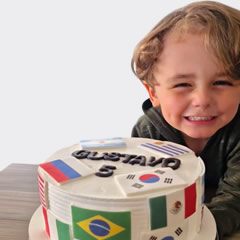
At just 5 years old, Gustavo turned a simple request to print coloring pages into an idea that now inspires children in more than 150 countries.
That is how Imprimivel.com was born, a project created alongside his father, Jean Bernardo, to spread color, imagination, and joy across 10 different languages, reaching a potential audience of more than 800 million children around the world.
Today, Gustavo is responsible for curating the content, enthusiastically choosing the themes and characters that will make other children smile, always under the editorial guidance of his father, who brings his son’s ideas to life.